What Does “Dragon” Mean?
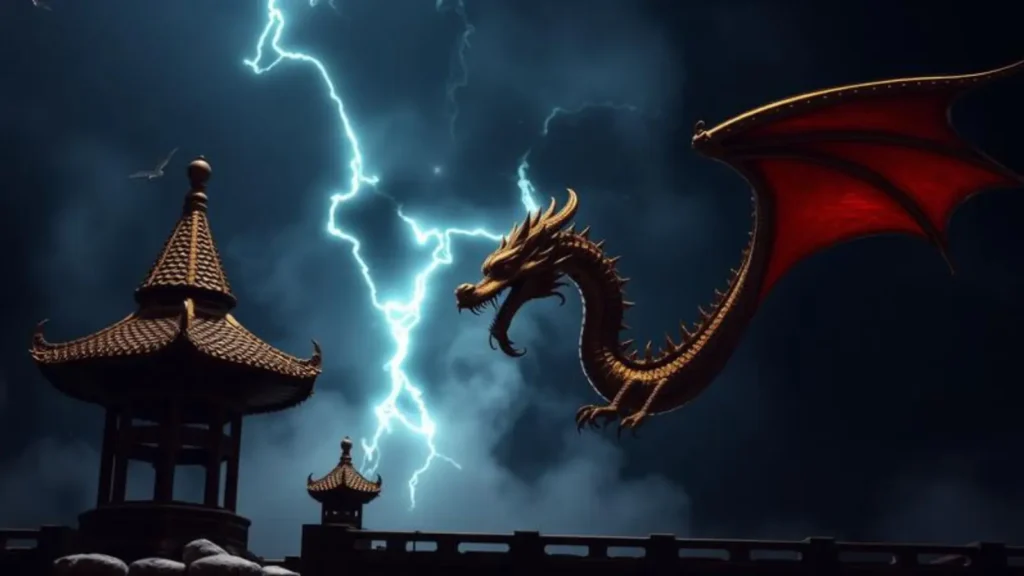
A dragon is a legendary or mythical creature traditionally represented as a large, powerful reptile or serpent-like being. In Western mythology, dragons are frequently portrayed as dangerous creatures capable of breathing fire, while traditions in East Asia may portray dragons as powerful, wise, fortunate, or benevolent beings.
The word can also be used figuratively.
For example:
- “The knight fought a dragon.”
- “The company faced a dragon of a competitor.”
- “She was a dragon in the courtroom.”
The third type of usage demonstrates why finding an opposite can be difficult. The meaning changes according to context.
Does “Dragon” Have an Antonym?
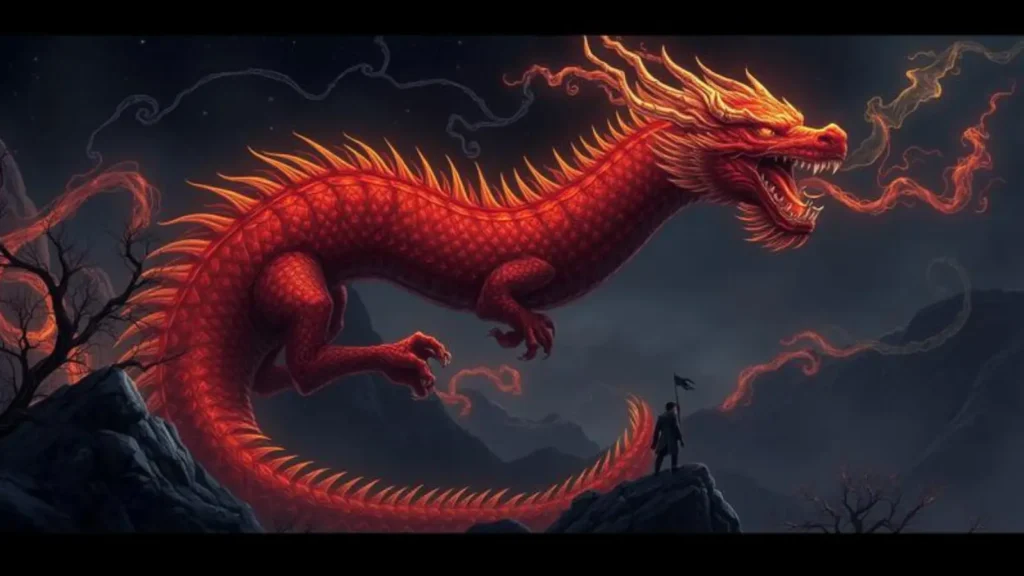
No—not in the strict lexical sense.
An antonym normally represents an established semantic opposite. Examples include:
- hot → cold
- early → late
- strong → weak
- ancient → modern
- light → dark
But dragon names an entity or creature rather than a quality existing on a simple semantic scale.
Therefore:
dragon ≠ human as a dictionary antonym.
A human and a dragon can be contrasting creatures in a fantasy story, but human is not the lexical opposite of dragon.
This distinction is especially important when creating vocabulary resources. A contextual contrast should not automatically be labeled a formal antonym.
The Dragon Antonym Context Matrix

Instead of searching for one supposedly perfect opposite, choose the contrasting word according to the semantic relationship you need.
| Context | Best contrasting word | Why |
| Creature classification | Human | Contrasts mythical creature with human being |
| Fantasy protagonist | Hero | Contrasts antagonist/monster with protagonist |
| Good vs. evil | Angel | Symbolically contrasts destructive and benevolent forces |
| Threat vs. safety | Protector | Contrasts danger with protection |
| Mortal vs. mythical | Mortal | Contrasts ordinary mortality with legendary power |
| Magical vs. ordinary | Ordinary creature | Removes supernatural characteristics |
| Villain vs. protagonist | Hero | Role-based contrast |
| Destroyer vs. guardian | Protector | Functional contrast |
| Beast vs. person | Human | Creature-category contrast |
This context-selection model is more accurate than simply giving readers a long list of alleged antonyms.
1. Human as a Contextual Opposite of Dragon
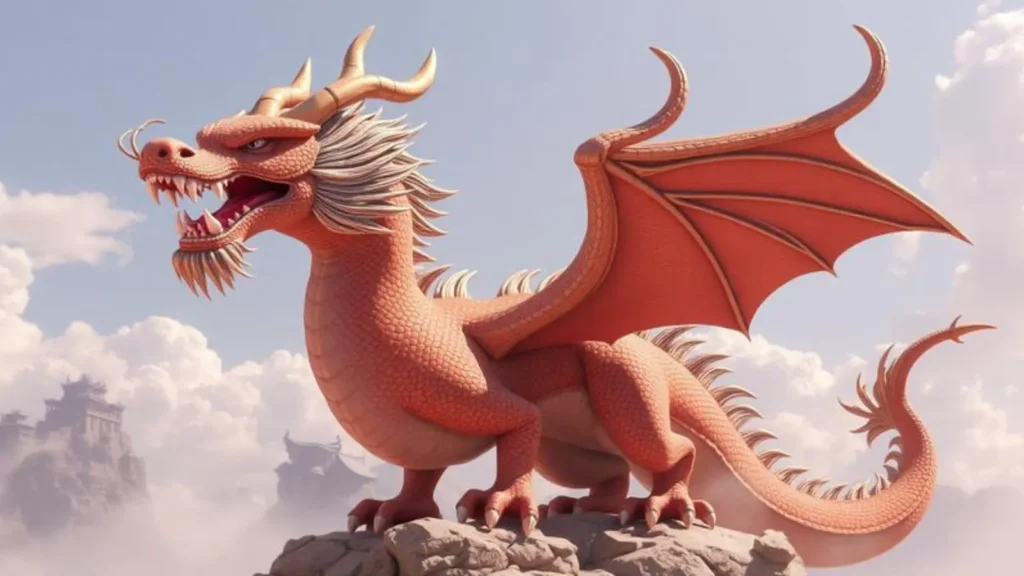
Definition: A human is a person belonging to the species Homo sapiens.
Relationship to dragon: A human can contrast with a dragon as an ordinary mortal being versus a mythical creature.
Tone: Neutral
Formality: Neutral
Best contexts: Fantasy, mythology, creature classification, storytelling
Examples
- “The dragon flew over the castle while the humans hid inside.”
- “The story follows a human knight who confronts a dragon.”
- “Humans and dragons belong to completely different categories of beings in the fictional world.”
Important distinction
Human is not a true antonym of dragon. It is a category-based contrast.
2. Hero as a Contextual Opposite of Dragon
Definition: A hero is a person admired for courage, noble actions, or exceptional achievements.
Relationship to dragon: In traditional fantasy narratives, a dragon often acts as an enemy while a hero acts as the protagonist.
Tone: Positive, courageous
Formality: Neutral
Best contexts: Fiction, fantasy, storytelling, gaming, literary analysis
Common collocations
- brave hero
- legendary hero
- fantasy hero
- heroic knight
- dragon-slaying hero
- courageous protagonist
Examples
- “The hero entered the cave to confront the dragon.”
- “The dragon was the greatest obstacle facing the young hero.”
- “Every classic fantasy story does not necessarily require a hero-versus-dragon conflict.”
Hero vs. dragon
This is a narrative opposition, not a dictionary antonymy.
The relationship can be summarized as:
dragon → threat/opponent
hero → protagonist/challenger
3. Angel as a Symbolic Opposite
Definition: An angel is traditionally understood as a spiritual or supernatural being associated with divine service, protection, or goodness in various religious and cultural traditions.
Tone: Positive, benevolent, spiritual
Formality: Neutral to formal depending on context
Best contexts: Symbolism, literature, mythology, religious writing, creative writing
Example
- “The author contrasts the destructive dragon with an angelic guardian.”
Here, angel works because the writer has established a symbolic contrast such as:
destruction ↔ protection
evil ↔ goodness
chaos ↔ order
But again, an angel is not the dictionary antonym of dragon.
4. Protector as a Functional Opposite
Definition: A protector is someone or something that keeps another person, place, or object safe from harm.
Tone: Positive, reassuring
Formality: Neutral
Best contexts: Leadership, storytelling, customer communication, branding, fantasy
Examples
- “The dragon was portrayed as a destroyer, while the knight served as a protector.”
- “Instead of presenting the creature as a monster, the author transformed the dragon into a protector.”
This contrast is particularly useful when the intended opposition is about function rather than species.
Semantic relationship
dragon as destroyer ↔ protector as guardian
Notice that the contrast depends on the dragon being portrayed as destructive. A benevolent dragon could itself be a protector.
5. Mortal as a Literary Contrast
Definition: Mortal describes a living being that is subject to death.
Tone: Literary, philosophical
Formality: Medium to high
Best contexts: Literature, mythology, fantasy, academic discussion
Examples
- “The immortal dragon watched over the mortal kingdom.”
- “The story explores the relationship between mortal heroes and ancient dragons.”
Mortal is particularly effective when the intended contrast is:
immortality ↔ mortality
It should therefore not be treated as a direct antonym of dragon.
Dragon Antonym by Writing Context
Different audiences require different vocabulary choices.
| Writing situation | Recommended contrast | Why |
| Everyday conversation | Human | Easy to understand |
| Professional writing | Human / ordinary being | Clear and neutral |
| Academic writing | Mortal / human | More precise depending on argument |
| Business communication | Competitor / ally | Only if “dragon” is metaphorical |
| Emotional expression | Protector / hero | Emphasizes character role |
| Creative writing | Hero / knight / guardian | Strong narrative contrast |
| Literary English | Mortal / angel / guardian | More symbolic |
| Formal writing | Human / mortal | Controlled and precise |
| Informal writing | Hero / human | Natural and accessible |
| Persuasive writing | Protector / hero | Positive emotional framing |
| Marketing copy | Guardian / protector | Strong positive association |
| Customer service | Protector / guardian | Reassuring language |
| Leadership communication | Guardian / protector | Emphasizes responsibility |
| Education | Human | Simplest conceptual contrast |
| Public speaking | Hero / protector | Memorable and emotionally clear |
Dragon vs. Hero
Dragon and hero are often opposites in fantasy storytelling, but their meanings belong to different lexical categories.
A dragon is primarily a creature or character.
A hero is primarily a role or character type.
Therefore, their relationship is:
creature vs. protagonist
rather than:
word vs. antonym
Example
“The hero defeated the dragon.”
The sentence establishes opposition through the story rather than through dictionary definitions.
Dragon vs. Human
This is one of the most natural contrasts when discussing types of beings.
Dragon
- mythical
- supernatural
- legendary
- often powerful
- frequently associated with fantasy
Human
- real-world species
- mortal
- ordinary biological being
- commonly associated with civilization and society
However, these characteristics are not universal. Some fictional dragons may be mortal, civilized, benevolent, or even human-like.
Dragon vs. Angel
This comparison is strongest in symbolic writing.
| Feature | Dragon | Angel |
| Common symbolism | Power, danger, chaos | Protection, goodness, guidance |
| Typical fantasy role | Monster/adversary | Guardian/helper |
| Emotional association | Fear or awe | Hope or reassurance |
| Semantic type | Mythical creature | Supernatural/spiritual being |
| Relationship | Contextual contrast | Contextual contrast |
Neither word is the formal antonym of the other.
Dragon vs. Protector
This contrast focuses on function.
A dragon can represent:
- danger
- destruction
- aggression
- fear
- power
A protector represents:
- safety
- defense
- security
- courage
- guardianship
This makes protector particularly useful when writing a story in which the central conflict is threat versus safety.
Dragon vs. Mortal
This is a more literary contrast.
Consider:
“The ancient dragon looked down upon the mortal king.”
Here, dragon represents an ancient mythical being, while mortal emphasizes human vulnerability.
The actual semantic opposition is not:
dragon ↔ mortal
but rather:
immortal/legendary ↔ mortal
That distinction matters in precise lexical writing.
A Vocabulary Ladder for Dragon-Related Contrasts
You can choose vocabulary according to the exact contrast you want.
Level 1 — Basic
dragon → human
Best for children, beginners, and general explanations.
Level 2 — Narrative
dragon → hero
Best for fantasy stories.
Level 3 — Functional
dragon → protector
Best when contrasting destruction and safety.
Level 4 — Symbolic
dragon → angel
Best when contrasting darkness and benevolence.
Level 5 — Literary
dragon → mortal
Best for mythology, literature, and sophisticated fantasy writing.
This ladder gives writers more control than simply memorizing an “antonym.”
Common Mistakes About Dragon Antonyms
Mistake 1: Calling “human” the official antonym
Incorrect: “The exact antonym of dragon is human.”
Better: “Human can serve as a contextual contrast to dragon, but dragon has no standard antonym.”
Mistake 2: Assuming every contrasting word is an antonym
A word can contrast with another word without being its antonym.
For example:
- dragon vs. hero = narrative contrast
- dragon vs. human = category contrast
- dragon vs. angel = symbolic contrast
- dragon vs. protector = functional contrast
- dragon vs. mortal = semantic contrast involving mortality
These are different lexical relationships.
Mistake 3: Using “good” as the antonym
A dragon is not inherently “bad.”
In some traditions and modern fantasy stories, dragons can be wise, protective, benevolent, or heroic.
Therefore:
dragon ≠ bad
and
good ≠ dragon’s antonym
The meaning depends heavily on the fictional or cultural tradition.
Grammar Tips for Using “Dragon”
Dragon is normally a countable noun.
Singular
- a dragon
- one dragon
- the dragon
Plural
- dragons
- several dragons
- the dragons
Useful structures
- a dragon attacks
- the dragon attacked
- dragons are
- a dragon’s scales
- the dragon’s lair
- dragon-like creature
- dragon mythology
Examples
- “A dragon appeared above the mountain.”
- “The dragons guarded the ancient kingdom.”
- “The hero discovered the dragon’s hidden lair.”
Pronunciation of “Dragon”
The word dragon is pronounced with two syllables in standard English.
The first syllable receives the primary stress.
For learners, the most important point is to avoid adding an unnecessary extra syllable at the beginning or end.
Useful Dragon Collocations
Understanding collocations helps writers use the word naturally.
Common noun combinations
- fire-breathing dragon
- mythical dragon
- legendary dragon
- ancient dragon
- giant dragon
- powerful dragon
- fierce dragon
- winged dragon
- sea dragon
- dragon’s lair
- dragon’s fire
- dragon mythology
- dragon legend
- dragon story
Common verb combinations
- fight a dragon
- defeat a dragon
- slay a dragon
- encounter a dragon
- summon a dragon
- tame a dragon
- ride a dragon
- fear a dragon
- face a dragon
- hunt a dragon
How to Choose the Best Dragon Opposite
Use this simple decision tree:
Do you need a creature-category contrast?
→ Choose human.
Do you need a fantasy protagonist?
→ Choose hero.
Do you need a moral or spiritual contrast?
→ Consider angel.
Do you need a safety-versus-danger contrast?
→ Choose protector or guardian.
Do you need a mortality contrast?
→ Choose mortal.
Do you need an ordinary-versus-supernatural contrast?
→ Use ordinary creature or normal being, depending on the sentence.
This approach produces more accurate and natural writing than forcing one word into every context.
Related Words to Dragon
The lexical field surrounding dragon includes several categories.
Mythical creatures
- dragon
- serpent
- wyvern
- griffin
- phoenix
- hydra
- basilisk
Fantasy roles
- hero
- villain
- knight
- wizard
- warrior
- guardian
- protector
Dragon characteristics
- powerful
- ancient
- mythical
- fierce
- enormous
- magical
- legendary
- fearsome
Dragon-related settings
- cave
- kingdom
- castle
- mountain
- dungeon
- treasure chamber
- enchanted forest
These related terms help establish semantic depth without pretending that every related word is an antonym.
Why Learning Contextual Opposites Matters
Vocabulary development is not simply about memorizing pairs such as hot/cold or big/small.
Many nouns—especially names of people, animals, objects, professions, and fictional entities—do not have conventional antonyms.
For these words, strong vocabulary users learn to recognize different kinds of contrast:
- Gradable antonymy — hot vs. cold
- Complementary opposition — alive vs. dead
- Relational opposition — buyer vs. seller
- Category contrast — dragon vs. human
- Narrative contrast — dragon vs. hero
- Symbolic contrast — dragon vs. angel
- Functional contrast — destroyer vs. protector
This framework is especially useful for students, writers, editors, translators, and content creators.
Expert Writing Advice
When answering a question such as “What is the antonym of dragon?”, avoid giving a confident but inaccurate one-word answer.
Instead, lead with the lexical fact:
“Dragon has no direct antonym in standard English.”
Then explain that the appropriate contextual contrast depends on the intended meaning.
For SEO and AI-search content, this approach is particularly valuable because it answers the user’s question immediately while providing semantic context that supports related queries such as:
- opposite of dragon
- dragon opposite word
- dragon antonym word
- what is the opposite of dragon
- dragon opposite meaning
- words related to dragon
- dragon synonyms and antonyms
- mythical creature opposite
- dragon vs human
- dragon vs hero
- dragon vs angel
- contextual antonyms
- types of antonyms
The goal should be semantic completeness, not keyword repetition.
FAQ: Dragon Antonym
What is the antonym of dragon?
There is no exact standard antonym for dragon in English. Depending on context, human, hero, angel, protector, or mortal can provide different types of contrast.
Is “human” the opposite of dragon?
Not technically. Human is a contextual category contrast, because a human is a real biological species while a dragon is traditionally a mythical creature.
Is “hero” an antonym for dragon?
Not in the dictionary sense. In fantasy storytelling, hero and dragon can be narrative opposites, especially when the dragon serves as the antagonist.
Is “angel” the opposite of dragon?
Not literally. Angel can function as a symbolic opposite when a dragon represents danger, evil, or destruction and an angel represents goodness or protection.
What is the opposite of a dragon in fantasy?
There is no universal answer. Hero, knight, human, guardian, protector, or angel may work depending on the fantasy world’s rules and the contrast being created.
Does every noun have an antonym?
No. Many nouns do not have direct antonyms. Antonymy is most straightforward with words expressing qualities, states, directions, relationships, or measurable concepts.
What is a good opposite of dragon in a story?
Hero is often the most natural choice when the dragon is the antagonist. If the intended contrast is danger versus safety, protector or guardian may be better.
Can a dragon be good?
Yes. Dragons are portrayed differently across cultures, mythologies, literature, games, and modern fantasy. A dragon can be evil, neutral, wise, benevolent, protective, or heroic.
Final Answer: What Is the Best Dragon Antonym?
The most linguistically accurate answer is:
Dragon has no direct, standard antonym in English.
If you need a contextual opposite:
- Human — for creature/species contrast
- Hero — for fantasy narrative contrast
- Angel — for symbolic moral contrast
- Protector — for danger-versus-safety contrast
- Mortal — for mortality-related literary contrast
- Guardian — for destructive-versus-protective roles

Logan Whitmore is an English vocabulary enthusiast and writer focused on helping readers choose the right words for the right context. He writes educational content covering synonyms, antonyms, word meanings, collocations, and common language usage. Through his contributions to Antonymly, Logan provides straightforward explanations and practical examples designed to strengthen vocabulary and writing skills.
