
What Is the Antonym of Ecosystem?

The best antonym of “ecosystem” depends on what you mean by the word. Because ecosystem describes a community of living organisms interacting with one another and with their physical environment, it does not have one perfect dictionary antonym.
In many contexts, useful contrasting terms include isolated system, nonliving environment, artificial environment, monoculture, and disconnected system. The most natural choice depends on whether you want to contrast interaction, biological diversity, naturalness, or interdependence.
Quick Answer
Ecosystem antonyms: isolated system, disconnected system, nonliving environment, artificial environment, monoculture, barren environment, and lifeless environment.
However, these words are contextual opposites, not exact interchangeable antonyms.
Ecosystem: Definition and Meaning

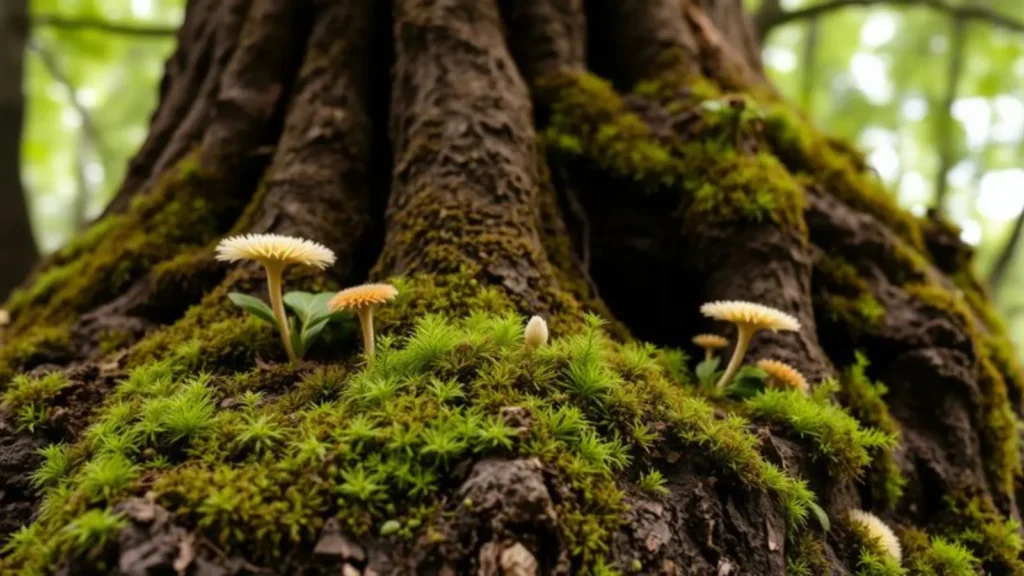
An ecosystem is a biological system consisting of living organisms—such as plants, animals, fungi, and microorganisms—and the nonliving elements around them, such as water, soil, air, sunlight, and minerals.
The defining idea is interaction and interdependence.
For example:
A forest ecosystem includes trees, insects, birds, animals, microorganisms, soil, water, and climate.
The word can also be used metaphorically outside biology:
- a business ecosystem
- a technology ecosystem
- a startup ecosystem
- a digital ecosystem
- a media ecosystem
- an educational ecosystem
In these contexts, ecosystem often means a network of interconnected participants, organizations, technologies, or resources.
Ecosystem Antonym: A Context-Based Lexical Model
Rather than memorizing one supposed opposite, it is more useful to understand ecosystem through four semantic dimensions.
| Meaning of ecosystem | Strong contrasting concept |
| Interconnected community | Isolated system |
| Biological diversity | Monoculture |
| Living environment | Lifeless environment |
| Natural interacting system | Artificial environment |
| Mutual dependence | Independence |
| Connected network | Disconnected system |
| Thriving habitat | Barren environment |
| Complex network | Single-function system |
This model helps you select an antonym according to meaning rather than simply choosing a word from a list.
20+ Ecosystem Antonyms and Related Opposites
Not every word below is a strict lexical antonym. Some are semantic opposites that become appropriate in particular contexts.
1. Isolated System
An isolated system is something separated from external interactions or influences.
Tone: Neutral, technical
Formality: Formal
Best context: Science, technology, systems theory
Example:
Unlike an ecosystem, an isolated system has limited interaction with its surroundings.
Why it works: It directly contrasts with the interconnected nature of an ecosystem.
2. Disconnected System
A disconnected system consists of elements that lack meaningful relationships or communication.
Best for: Technology, business, organizations, networks.
The company operated as a disconnected system rather than an integrated ecosystem.
Distinction: Isolated emphasizes separation; disconnected emphasizes lack of relationships.
3. Monoculture
A monoculture is an environment dominated by a single species or type of organism, especially in agriculture.
Tone: Technical
Formality: Formal
A monoculture generally has less biological diversity than a healthy ecosystem.
Important: Monoculture is not the universal antonym of ecosystem. It is specifically useful when the contrast concerns biodiversity and variety.
4. Artificial Environment
An artificial environment is an environment created or substantially controlled by humans.
A laboratory may provide an artificial environment rather than a naturally occurring ecosystem.
Best context: Biology, education, science, environmental writing.
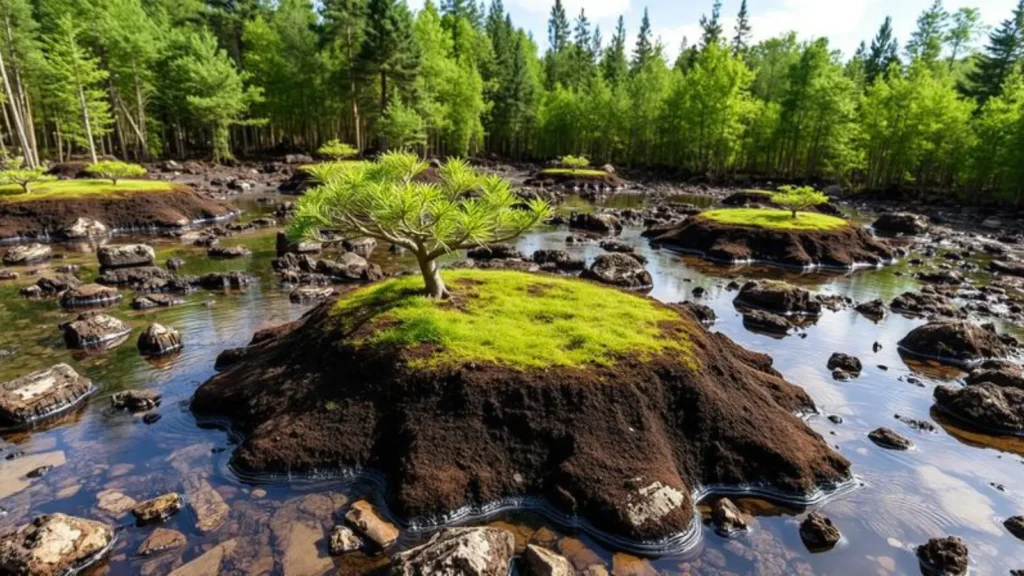
5. Lifeless Environment
A lifeless environment describes a place with no living organisms.
Scientists found the area to be almost completely lifeless.
This is a strong semantic contrast because ecosystems require living components.
6. Barren Environment
A barren environment is an environment where little or nothing grows.
The barren landscape supported very little biological activity.
Tone: Descriptive
Formality: Neutral
Unlike lifeless, barren does not necessarily mean absolutely devoid of life.
7. Nonliving Environment
A nonliving environment contains physical elements but lacks biological organisms.
Water, temperature, rocks, and minerals can form part of a nonliving environment.
This term is particularly useful in scientific explanations.
8. Independent System
An independent system operates without depending heavily on other systems.
The project was designed as an independent system rather than part of a larger ecosystem.
Contrast: ecosystem → interdependence; independent system → independence.
9. Separate Entity
A separate entity exists independently rather than as an interconnected component of a larger network.
The department functioned as a separate entity instead of participating in the organization’s wider ecosystem.
This is especially useful in business writing.
10. Fragmented System
A fragmented system consists of separated parts that do not function as a cohesive whole.
The healthcare sector remained a fragmented system with limited coordination.
This is one of the strongest choices when discussing organizational or digital ecosystems.
Ecosystem Antonyms by Context
The best opposite changes according to your audience and purpose.
| Context | Recommended opposite |
| Biology | Lifeless environment |
| Biodiversity | Monoculture |
| Environmental science | Barren environment |
| Technology | Disconnected system |
| Business | Independent operation |
| Organizations | Fragmented system |
| Systems theory | Isolated system |
| Academic writing | Nonliving environment / isolated system |
| Creative writing | Lifeless landscape |
| Marketing | Standalone product |
| Education | Independent learning environment |
Ecosystem vs. Isolated System
This is one of the most useful conceptual comparisons.
An ecosystem is defined by relationships among components. An isolated system emphasizes separation from outside influences.
Compare:
| Feature | Ecosystem | Isolated system |
| Interaction | High | Limited |
| Interdependence | Strong | Low |
| External influence | Common | Restricted |
| Components | Interconnected | Separated |
| Typical context | Biology, business, technology | Science, systems theory |
Example:
A coral reef is an ecosystem because numerous organisms interact with one another and their physical environment.
A theoretical isolated system is considered separately from external influences.
Which should you choose?
Use isolated system when your emphasis is on separation.
Use disconnected system when your emphasis is on poor relationships or communication.
Ecosystem vs. Monoculture
These terms are sometimes incorrectly treated as direct antonyms.
They are not exact opposites.
An ecosystem can contain many species, while a monoculture intentionally emphasizes one species.
Example
The forest represents a diverse ecosystem, whereas the agricultural field is a monoculture dominated by one crop.
Use monoculture when discussing:
- biodiversity
- agriculture
- ecological resilience
- species diversity
- environmental management
Do not use monoculture as a replacement for ecosystem in business or technology writing.
Ecosystem vs. Artificial Environment
The distinction here is natural versus human-created.
An ecosystem can be natural or human-influenced, so artificial environment is a contextual contrast rather than a perfect antonym.
Example
A natural wetland functions as an ecosystem, while a controlled laboratory tank may represent an artificial environment.
This distinction is particularly useful for academic and educational writing.
Ecosystem in Business and Technology
The modern meaning of ecosystem extends far beyond ecology.
A business ecosystem can include companies, customers, suppliers, investors, platforms, regulators, and partners.
A technology ecosystem may include:
- hardware
- software
- developers
- users
- platforms
- applications
- services
- APIs
In these contexts, the strongest opposites are often:
- standalone system
- independent operation
- disconnected system
- fragmented system
- single-purpose solution
Example
The company moved from a fragmented system to an integrated digital ecosystem.
Here, fragmented system is more natural than lifeless environment.
Ecosystem Antonyms in Different Types of Writing
Everyday Conversation
Use simple expressions such as:
- isolated environment
- separate system
- disconnected system
- lifeless place
Example:
Without interaction between the species, it would not function like a normal ecosystem.
Academic Writing
Prefer precise technical terminology:
- isolated system
- nonliving environment
- monoculture
- artificial environment
- fragmented system
Example:
A monoculture differs from a diverse ecosystem in terms of species composition and ecological interactions.
Business Communication
Use organizational language:
- standalone operation
- independent system
- fragmented system
- disconnected network
Example:
Our previous departments operated as disconnected units rather than as an integrated business ecosystem.
Marketing Copy
Marketing language often contrasts an ecosystem with a standalone product.
Instead of a standalone product, our platform creates an interconnected digital ecosystem.
This framing emphasizes connectivity and added value.
Creative and Literary Writing
You can use expressive alternatives:
- lifeless landscape
- barren world
- isolated realm
- disconnected world
Beyond the ruined city stretched a barren landscape where nothing seemed to grow.
These are stylistic contrasts rather than dictionary antonyms.
Ecosystem Word Family and Related Vocabulary
Understanding the lexical field around ecosystem improves vocabulary more than memorizing isolated antonyms.
Closely related terms
- habitat
- biome
- biosphere
- environment
- ecology
- community
- population
- organism
- biodiversity
- food web
- food chain
- ecological network
- natural system
- biological community
- interdependence
Conceptual opposites
- isolation
- separation
- fragmentation
- uniformity
- independence
- disconnection
- lifelessness
- artificiality
Common Collocations With Ecosystem
Learning collocations helps you use ecosystem naturally.
Environmental collocations
- natural ecosystem
- marine ecosystem
- forest ecosystem
- aquatic ecosystem
- terrestrial ecosystem
- fragile ecosystem
- diverse ecosystem
- healthy ecosystem
- balanced ecosystem
- complex ecosystem
- sustainable ecosystem
Business and technology collocations
- business ecosystem
- digital ecosystem
- technology ecosystem
- startup ecosystem
- innovation ecosystem
- platform ecosystem
- partner ecosystem
- software ecosystem
Common verbs
- protect an ecosystem
- preserve an ecosystem
- damage an ecosystem
- restore an ecosystem
- disrupt an ecosystem
- support an ecosystem
- create an ecosystem
- build an ecosystem
- maintain an ecosystem
Common Mistakes When Choosing an Ecosystem Antonym
Mistake 1: Assuming there is one perfect antonym
There isn’t always a single lexical opposite.
Better approach: Identify the specific feature you want to contrast.
Mistake 2: Using “monoculture” everywhere
Monoculture specifically concerns dominance by one species or crop.
It is not the opposite of every type of ecosystem.
Mistake 3: Confusing “environment” with “ecosystem”
An environment is the surrounding physical, biological, or social setting.
An ecosystem specifically involves interacting living organisms and their physical surroundings.
Mistake 4: Treating “artificial” as the exact opposite
An artificial ecosystem can still be an ecosystem.
For example, a carefully controlled aquarium can contain interacting living organisms and physical components.
Mistake 5: Using “isolated” when you mean “lifeless”
An isolated ecosystem can still contain abundant life.
If your intended meaning is “without life,” lifeless or nonliving environment is more accurate.
A Simple Decision Tree for Choosing the Right Opposite
Ask yourself one question:
What aspect of “ecosystem” am I contrasting?
Interconnection?
→ Choose isolated system or disconnected system.
Biodiversity?
→ Choose monoculture or uniform environment.
Living organisms?
→ Choose lifeless environment or nonliving environment.
Natural origin?
→ Choose artificial environment.
Organizational integration?
→ Choose fragmented system.
Business independence?
→ Choose standalone operation or independent system.
This approach produces much more accurate writing than simply searching for “ecosystem antonym” and selecting the first word you find.
Vocabulary Ladder: From Ecosystem to Its Opposite
A useful way to understand the semantic scale is:
Integrated ecosystem
↓
Connected network
↓
Interacting system
↓
Partially connected system
↓
Fragmented system
↓
Disconnected system
↓
Isolated system
This is not a strict dictionary hierarchy. It is a semantic spectrum showing decreasing interaction and interdependence.
A second spectrum can focus on biological diversity:
Biodiverse ecosystem → diverse community → limited diversity → monoculture → lifeless environment
These two scales explain why no single antonym works in every sentence.
How to Choose the Most Natural Word
Before replacing ecosystem, consider four factors:
- Meaning: What specific concept are you contrasting?
- Audience: Is the reader a student, scientist, customer, or general reader?
- Register: Should the language be casual, academic, or professional?
- Connotation: Do you want a neutral, negative, technical, or literary effect?
For example:
“The company lacks an ecosystem.”
A business writer might say:
“The company operates as a standalone business.”
A technology writer might say:
“The platform remains disconnected from the wider digital ecosystem.”
An organizational consultant might say:
“The organization has a fragmented operating structure.”
All three communicate related ideas, but each creates a different meaning.
Frequently Asked Questions
What is the exact antonym of ecosystem?
There is no single exact antonym that works in every context. Isolated system, disconnected system, monoculture, and lifeless environment can function as contextual opposites.
What is the opposite of an ecosystem in biology?
In biology, a lifeless or nonliving environment can represent the clearest conceptual contrast, while monoculture can contrast with an ecosystem when the focus is biodiversity.
Is “isolated system” the opposite of ecosystem?
It can be a strong contextual opposite because an ecosystem is characterized by interaction and interdependence. However, it is not a universal dictionary antonym.
Is monoculture an antonym of ecosystem?
Not exactly. A monoculture is an environment dominated by one species or crop. It can contrast with a diverse ecosystem, particularly when discussing biodiversity.
What is the opposite of a business ecosystem?
Depending on the intended meaning, good choices include standalone business, independent operation, disconnected network, and fragmented system.
What is the opposite of a digital ecosystem?
A standalone system, isolated platform, or disconnected technology stack can work, depending on the context.
What are simple words related to the opposite of ecosystem?
Simple choices include isolated, separate, disconnected, independent, lifeless, barren, and fragmented.
Why doesn’t ecosystem have one clear antonym?
Because ecosystem combines several ideas: living organisms, environment, interaction, interdependence, diversity, and relationships. An antonym can therefore oppose any one of these characteristics without opposing all of them simultaneously.
Final Takeaway
The best ecosystem antonym is determined by context rather than by a single universal opposite.
If you mean lack of connection, use isolated system or disconnected system. If you mean lack of biodiversity, use monoculture. If you mean absence of life, use lifeless environment or nonliving environment. If you mean lack of organizational integration, choose fragmented system or standalone operation.

Nathaniel Hayes is a language content writer with a strong interest in English vocabulary, word relationships, and effective communication. His work focuses on antonyms, synonyms, definitions, related words, examples, and everyday usage. At Antonymly, Nathaniel aims to make English easier to understand by turning complex vocabulary concepts into simple, useful, and reader-friendly explanations.
